On Beyond the Coffee Date: What We Miss When We Stop Being Curious About Men
In my last post, I wrote about effort in dating and how somewhere along the way, many of us started confusing intentionality with “trying too hard.” We explored how nonchalance has become a kind of social currency and how dating often feels increasingly low-stakes, disconnected, and emotionally guarded.
But there is another layer to this conversation that I’ve been thinking about.
If we’re going to talk about why dating feels difficult right now, we also need to talk about men.
Not the caricature of men that often exists online. Not the worst examples. Not the headlines.
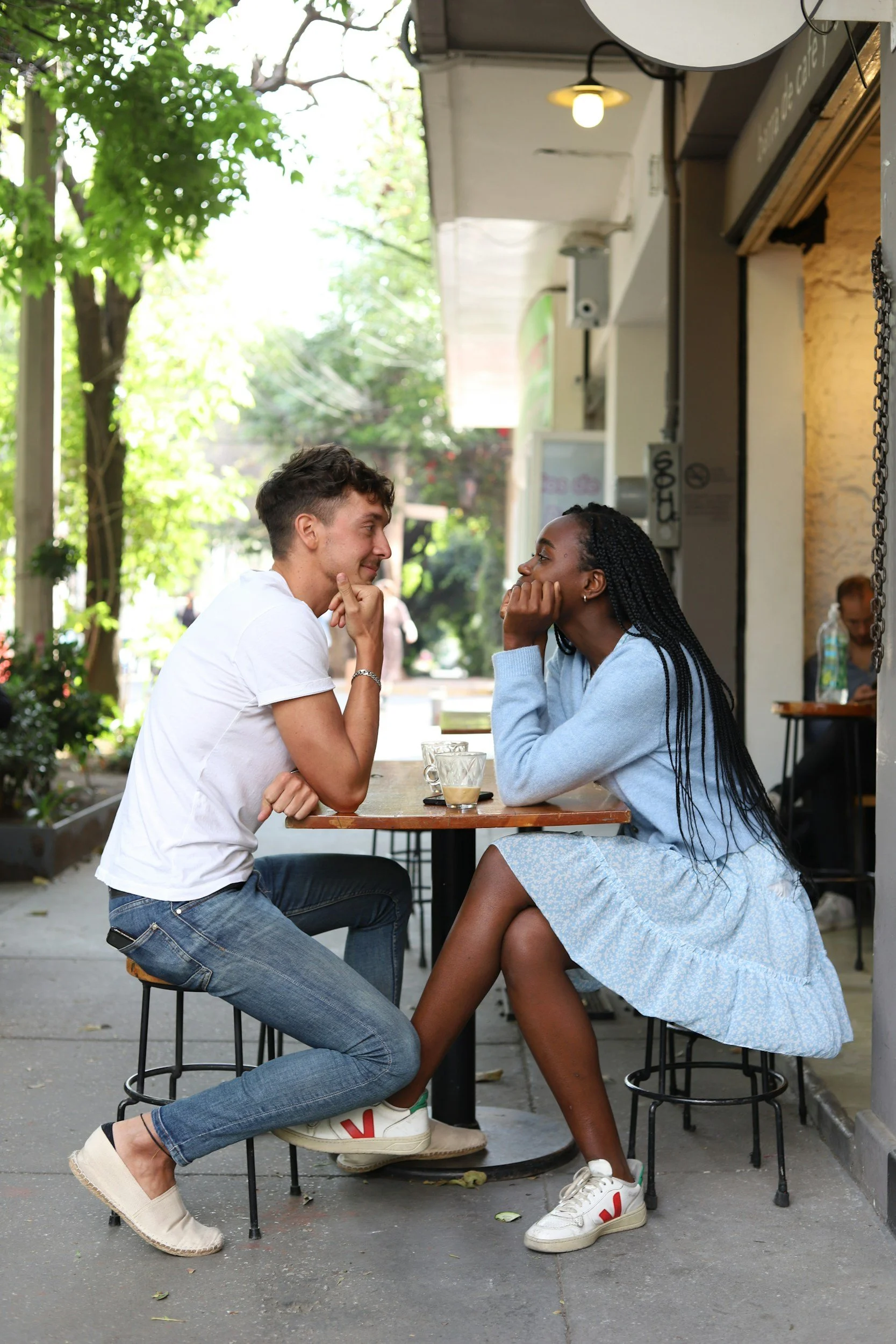
The actual men sitting across from us on dates, trying to make sense of a rapidly changing world.
making space for two truths
Before going any further, I want to be clear about something. The success of women should never be diminished.
Women having greater access to education, leadership opportunities, financial independence, and autonomy is something worth celebrating. Many of these changes emerged because women challenged systems that were limiting and inequitable.
Acknowledging that reality and acknowledging that many men are struggling are not mutually exclusive.
In therapy, we often talk about the ability to hold multiple truths at once.
Both Can Be True
Women have faced significant barriers.
Many men are struggling.
Both can be true.
The problem is that public conversations about gender often leave very little room for complexity.
the men I know
The men I know are not the men I often see described online.
I know men who read books about relationships.
I know men who are in therapy.
I know men who spend hours reflecting on how they communicate with partners.
I know men who are trying to understand emotional intelligence, attachment, boundaries, and vulnerability.
I know men who care deeply about showing up well.
And yet many of those same men tell me they feel like they’re getting it wrong.
Dating Often Feels Like a Maze
Many men describe:
Overthinking texts
Replaying conversations
Wondering whether they were too interested—or not interested enough
Questioning whether initiating is expected or unwelcome
Worrying whether confidence will be perceived as confidence or arrogance
Second-guessing what they say, how they say it, and whether they should have said anything at all
For a lot of men, dating doesn't feel effortless.
It feels like walking through a maze without a map.
the changing role of masculinity
One theme that has emerged in recent years is that many traditional markers of masculinity are being reevaluated.
In some ways, this is incredibly important. Many rigid expectations around masculinity have historically discouraged emotional expression, vulnerability, help-seeking, and authentic connection.
At the same time, many men are trying to figure out what replaces those expectations.
When the Old Rules No Longer Apply
Author and social commentator Scott Galloway has spoken extensively about the challenges facing young men, including struggles with:
Purpose
Belonging
Educational achievement
Economic stability
Relationships
A recurring theme in his work is that many men are searching for a meaningful role in a society that is changing faster than their understanding of where they fit within it.
That uncertainty doesn’t just show up at work.
It shows up on dates.
It shows up in relationships.
It shows up in how men see themselves.
Learning Skills They Were Never Taught
For many men, there is a genuine desire to be emotionally available, relationally aware, and supportive partners.
The challenge is that they are often trying to develop skills they were never explicitly taught.
when empathy becomes selective
One thing I notice in conversations about dating is how quickly compassion can disappear when discussing men.
We often encourage people to approach others with curiosity.
To ask:
"What happened?"
Instead of:
"What's wrong with you?"
We encourage context, understanding, and empathy—to understand someone’s story.
Until we're talking about men.
Curiosity Creates Growth
The conversation can quickly become:
"Men are trash."
"Men are the problem."
"Men just need to do better."
While frustration with harmful behavior is understandable, broad generalizations rarely create understanding.
From a relational perspective, shame is not usually what helps people grow.
Curiosity does.
Connection does. Accountability paired with empathy does.
Many men are carrying insecurities, fears, disappointments, loneliness, and uncertainty that remain largely invisible because vulnerability is still culturally complicated for them.
When we dismiss those experiences outright, we lose an opportunity for understanding.
Helping Men Build Real Connection
Many men are searching for deeper connection, meaningful friendships, and spaces where vulnerability is welcomed rather than judged.
Guys Night Groups
At Kindman & Co., our Guys Night Groups offer men a place to connect authentically, build community, and have conversations that go beyond surface-level interactions.
Whether you're navigating relationships, loneliness, life transitions, or simply looking for a stronger support system, these groups create space for honest conversation and meaningful connection.
Interested in learning more? Learn more about our Guys Night Group offerings in Highland Park, L.A.
the loneliness beneath the surface
What interests me clinically is not simply whether loneliness exists, but how loneliness shapes relationships.
Many men were not socialized to build emotional intimacy through friendships in the same ways many women were.
As a result, romantic relationships can become one of the primary places where men hope to experience emotional closeness, acceptance, and understanding.
That is a tremendous amount of pressure for any relationship to carry.
How Loneliness Impacts Dating
When people are lonely:
Rejection often feels bigger
Silence feels louder
Dating feels more personal
What may appear as withdrawal, hesitation, or emotional distance can sometimes be fear.
Not fear of commitment.
Fear of inadequacy.
Fear of rejection.
Fear of not measuring up.
what if we became curious again?
The goal is not to excuse harmful behavior. The goal is not to suggest women should tolerate poor treatment. The goal is not to romanticize men or ignore real concerns.
The goal is curiosity.
Questions Worth Asking
What happens when we stop assuming and start asking?
What happens when we make room for the possibility that many men are not detached because they don’t care, but because they care deeply and don’t know what to do with their vulnerability?
What happens when we recognize that growth often occurs in environments where people feel understood rather than condemned?
These questions matter because utlimately, dating is relational. And relationships rarely improve when entire groups of people are reduced to stereotypes.
secure relationships require all of us
If we want dating culture to become more connected, more intentional, and more authentic, we need more than better communication skills.
We need more empathy.
Empathy for Everyone Navigating Modern Relationships
For women and femme folks navigating:
Safety concerns
Emotional labor
Societal expectations
For men and masc folks navigating:
Uncertainty
Loneliness
Shifting identities
Changing cultural expectations
Connection has never been built through contempt.
It has always been built through curiosity.
The more I sit with clients, friends, and people navigating modern relationships, the more convinced I become that most people are not asking to be perfect.
They are asking to be understood.
Maybe that includes the men who are trying, learning, reflecting, and showing up as best they can, too.