
On Grief in the In-Between: Parent Loss in Young Adulthood

Young adulthood is often understood as the period when we step out to begin building the foundation for the life ahead of us.
This might look like leaving the "nest," starting a career, going to college, or perhaps renting your first apartment. This is often the time when we ask ourselves:
"Who am I?"
"What do I want to pursue in this chapter?"
"How can I build a life for myself that is aligned with who I am?"
This process is important and oftentimes filled with nerves, excitement, hope, fear, and anticipation for the unknown.
A complex process in itself.
But for some of us, this chapter takes on a different shape.
In the middle of all that becoming, a parent dies.
The foundation we were working to build then shifts entirely.
Now you are faced with grieving the loss of a part of the foundation of you, while also being expected to continue building your future. Two enormous processes, happening at once, with very little precedent for how to hold both.
When the World Keeps Moving After Your Parent Dies
The rug is pulled out from under you, and yet the world keeps spinning.
Classes still meet. Work shifts still need covering.
Everyone else's life continues moving forward, largely undisturbed, while yours has just been split into a before and after.
There is no pause button. No universal understanding that says, take the time you need.
You are expected to keep spinning along with a world that has not stopped for you, even though yours has.
This is one of the many complexities of losing a parent in young adulthood.
Why Losing a Parent in Young Adulthood Feels So Different
One of the unique challenges of losing a parent during young adulthood is that you're caught between life stages.
You are no longer seen as a child, so there can be an expectation that you should already be equipped. But you’re also not yet an established adult.
You may lack the life infrastructure that help cushion a person in this kind of loss.
This might look like:
no partner to come home to
no well-established friend group who has weathered hard things with you
no steady career or
no home that gives you a sense of solid ground.
Instead, you’re being asked to grieve in the middle of trying to build all of these things for the first time.
The Space Between
This can be an incredibly isolating experience.
Few peers are able to relate, as they have not yet experienced a loss like this, leaving a difficult disconnect due to a lack of experience and language to understand it. They want to help, but they don’t always know how.
School does not pause.
Work does not pause.
The rent still needs to be paid, the classes still need to be attended, and the job still needs to be shown up for.
Grief has to somehow fit itself into a life that is still very much under construction.
And because you are technically an adult, there is often an unspoken expectation that you will simply manage. That you will handle grief the way adults are supposed to handle hard things.
But the truth is, managing grief and building a life at the same time is not something anyone is fully equipped for, at any age.

You're Not Grieving Wrong
If you have felt isolated, it’s not because you are grieving wrong or because you are less resilient than you should be.
It is because there is a real gap in support here.
It's important to note that there is never a good time to navigate grief.
Spousal loss usually has support built around it. Losing a parent as a young child often comes with resources specifically designed for that age.
But losing a parent as a young adult, coming into being, you’re caught between those worlds. This kind of loss doesn’t have the same built-in community.
You are left to find your own way through it, often without anyone around you who understands the specific shape of this loss.
My Experience of Losing My Dad
I remember experiencing a frequent push and pull after my dad died.
I longed to be seen and held in my grief, but in a new environment, with new friends, many of whom did not share in this experience. This made it so hard to reach for support.
At times, I remember feeling angry, lonely, sad, and jealous of those around me for having the opportunity to continue building their lives the way I hoped to, but also relieved that they didn't have to navigate this at the time.
I remember feeling like this lone astronaut, floating in space, untethered, scared, looking into the dark, endless abyss.
I did not know it then, but that feeling of floating untethered was not something I had to sit with alone.
It just took time and, eventually, the right people to find my way back to solid ground.
You Don’t Have to Build this Alone.
This is why Dead Parents Club exists.
Not as a replacement for the life stage support you may be missing: the partner, the established friendships, the steady ground.
Instead, this is a space built specifically for this experience, for young adults who are trying to grow into who they are while also carrying the death of a parent.
If this experience feels familiar, you are welcome here.
Building Your Life and Grieving Can Happen Together
You are allowed to be in process with both.
Building your life and grieving your parent are not separate tracks that have to wait for one another.
They can, and often do, happen at the same time.
You don’t have to walk this path alone.
Join Dead Parents club — Young Adult parent loss Group in Highland Park
If you are looking for a place where you don't have to do this alone, our ongoing group is designed for real humans between 18-25 years old who are navigating the heaviness of these exact complexities.
The Next Steps: To ensure this group is the right fit for your specific needs, we start with a Discovery Call. This allows our Care Coordinator to act as your advocate, ensuring you are set up with the right community from the start.
Learn more about Dead Parents Club and see if this is the club you’ve been needing →
Featured therapist author:
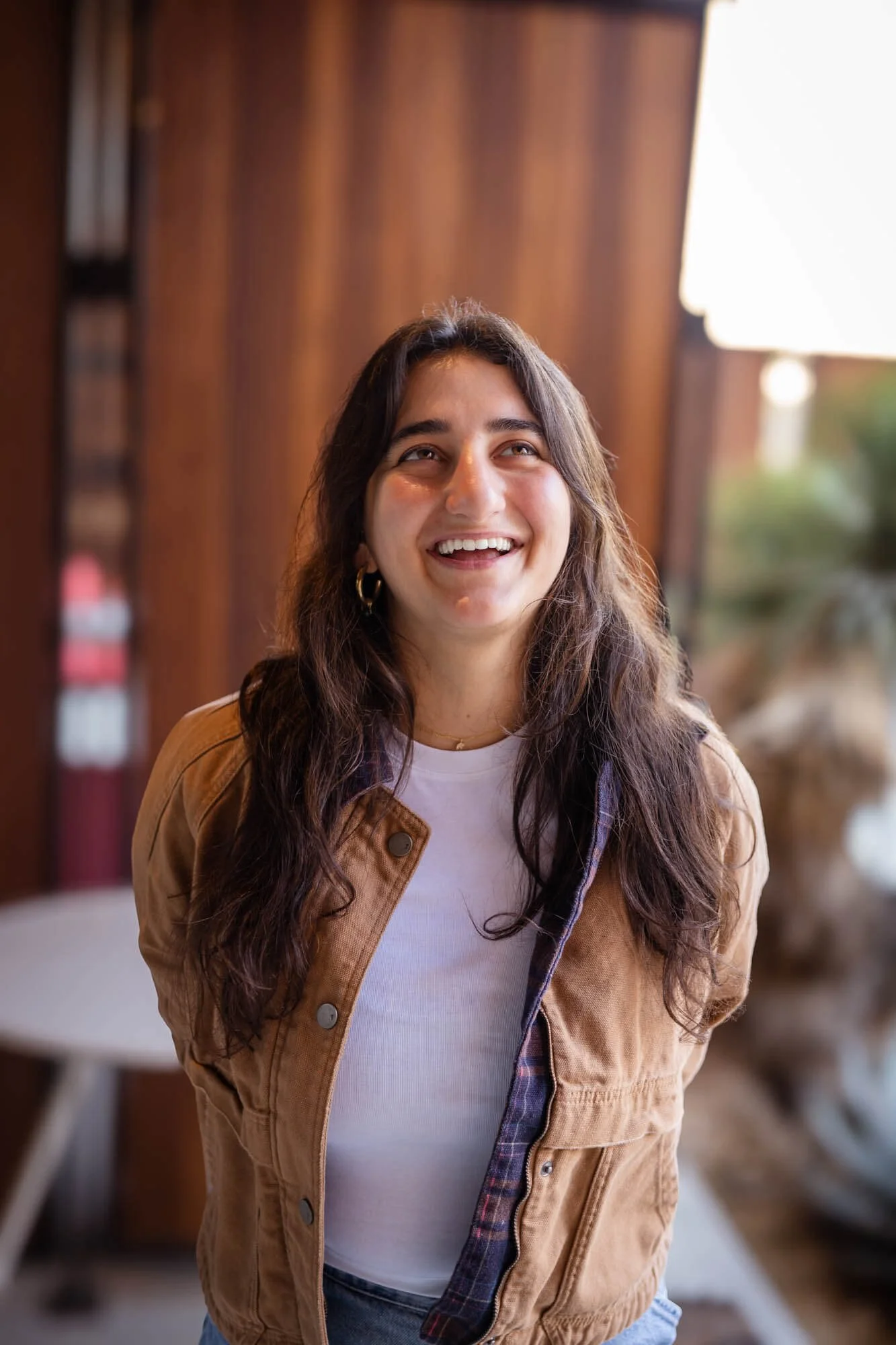
Elizabeth Taylor is a queer, neurodivergent Associate Marriage and Family Therapist #132575 who brings a deep understanding of trauma and the many ways it can shape our bodies, relationships, and sense of self. She is committed to creating therapeutic spaces that feel safe, inclusive, and grounded in genuine care. Her goal is to offer a place where healing can unfold through connection, community, and the steady presence of someone who truly sees you. Elizabeth is especially passionate about working with queer and LGBTQIA+ clients and neurodivergent communities. Much of her work centers on exploring identity, desires, relationships, and the impact of the systems we move through. She supports clients in questioning limiting narratives, reclaiming their autonomy, and rediscovering the parts of themselves that have always deserved gentleness.
Her approach balances depth with playfulness, honoring the heaviness that can come with healing while still making room for joy, silliness, and moments of ease. Outside of therapy, Elizabeth is a sister, daughter, friend, devoted cat parent, and lifelong deep thinker. She enjoys discovering new corners of the city, spending time in parks, mermaiding, hiking, snowboarding, crafting, and getting a little too invested in board games. Her life and work are guided by a strong commitment to justice, equity, and community connection.
GET HELP NOW
If you are interested in therapy with Kindman & Co. and would like to learn more about the services we have to help you, follow these quick & easy steps:
Schedule a free 20-minute phone consultation with our Care Coordinator.
Get matched with the therapist who’s right for you.
Start feeling more supported and fulfilled in your life!
THERAPY AT KINDMAN & CO.
We are here for your diverse L.A. counseling needs. Our team of therapists provides lgbtqia+ affirmative therapy, grief & loss counseling, group therapy, and more. We have specialists in trauma, women's issues, depression & anxiety, substance use, mindfulness & embodiment, and support for creatives. For therapists and practice owners, we also provide consultation and supervision services! We look forward to welcoming you for therapy in Highland Park and online.
