On Beyond the Coffee Date: When Success Changes the Dating Pool

Modern dating has given us more freedom, more opportunity, and more choices than any generation before us. But with those choices come tradeoffs.
In this article, I explore how dating expectations, success, compatibility, and modern relationship dynamics create tensions that no one can completely avoid, and why accepting those tradeoffs may be the key to building a meaningful partnership.
Why Modern Dating Feels More Complicated Than Ever
Over the last few posts, I’ve written about effort in dating, the importance of curiosity, and how our choices shape our opportunities. The more I sit with these conversations, both personally and professionally, the more I find myself returning to an uncomfortable question:
Can we really have our cake and eat it too?
Not in the dismissive way the phrase is often used.
Not as a criticism.
But as a genuine question about the expectations many of us bring into modern relationships.
Because sometimes it feels as though we’ve been sold a vision of life where tradeoffs no longer exist.
Where we can have every opportunity without sacrifice.
Every option without loss.
Every desire without tension.
And yet, most meaningful things in life seem to ask something from us.
The difficult part isn’t just that tension exists—it’s that we often pretend it doesn’t.
We build expectations as if everything we want should naturally align, as if wanting more doesn’t inherently create friction.
But it does.
And ignoring that tension doesn’t remove it—it just makes the experience more confusing and frustrating when reality doesn’t match the expectation.
The Promise of Modern Life and the Reality of Choice
In many ways, we are living through an extraordinary moment in history.
People have more freedom than ever to choose their careers, partners, lifestyles, and futures.
For women especially, opportunities that were unavailable to previous generations are now accessible.
This is worth celebrating.
The ability to pursue education, financial independence, leadership, and self-determination has expanded countless lives.
At the same time, freedom creates new questions.
Because having more options doesn’t eliminate the reality of choice.
It simply gives us more choices to make.
And every choice comes with consequences.
Not punishment.
Consequences.
A path taken.
A path left behind.
And yet, we often approach these choices as if we shouldn’t have to feel that tension at all—as if the right path will somehow give us everything without requiring us to give anything up.
That expectation is where things begin to break down.
“Freedom doesn’t eliminate tradeoffs. It simply gives us more choices about which tradeoffs we’re willing to make”
How Success Can Change Your Dating Pool
There’s a conversation I’ve been seeing more often lately about how success changes the dating pool—especially for women.
The idea is simple, but uncomfortable.
As women become more educated, more financially independent, and more accomplished, the pool of partners they feel aligned with can shrink.
Not because something is wrong.
But because alignment becomes more specific.
Why Success Can Narrow Your Options
I’ve heard women say they want someone who matches them intellectually, financially, and in ambition.
Someone who inspires them.
Someone they respect.
Someone who can meet them where they are.
Again, none of this is unreasonable.
But it does raise a question:
What happens when your standards evolve faster than the available pool?
Or when the traits you value most exist in a smaller percentage of people?
More Selectivity Doesn't Mean Something Is Wrong
For example, a woman who has built a demanding career in law or medicine might find that her schedule, income level, and lifestyle expectations narrow her dating pool to a small subset of similarly driven individuals—many of whom are equally time-constrained or already partnered.
Success doesn’t just expand your life.
It can also narrow your options.
And it’s unrealistic to expect that this shift won’t create tension.
Wanting a highly specific kind of partner while also expecting abundance in options ignores the reality of how selectivity works.
The more precise the criteria, the smaller the pool.
That’s not unfair—it’s simply how filtering functions.
Are Our Relationship Expectations Becoming Impossible?
One thing I’ve noticed in conversations about dating is that our expectations have expanded dramatically.
The Expanding Job Description of a Partner
We don’t just want a partner.
We want a best friend.
A lover.
A co-parent.
A travel companion.
An intellectual equal.
An emotional support system.
Someone attractive.
Someone successful.
Someone emotionally available.
Someone ambitious.
Someone who understands us completely.
Again, none of these desires are unreasonable on their own.
The challenge is that we often want all of them simultaneously.
And we expect them to coexist effortlessly.
But the more requirements we add, the more selective the process becomes.
Every Preference Narrows the Field
At some point, we have to acknowledge that every preference narrows the field.
Not because preferences are wrong.
Because they are selective by nature.
And it’s unrealistic to expect that increasing selectivity won’t come with increased difficulty.
That tension is not a flaw in the system—it’s a natural outcome of how we’re choosing.
“Perhaps attraction is sometimes something we uncover rather than something we instantly recognize.”
What I Learned in My Own Relationship
I say this not just as an observation, but from personal experience. I have many of the things people often list when they describe an ideal partnership: shared education, a partner who is also a travel companion, high earning potential, an intellectual equal, a best friend, a source of support.
But that outcome didn’t appear effortlessly or without friction.
It came through incredibly difficult conversations, moments of misalignment, reflection on what actually mattered most, and a willingness to truly consider the person across from me—who they are, what they value, and where they want to go. None of that process was clean or linear, but it was necessary.
If you're finding yourself stuck between wanting partnership and feeling overwhelmed by modern dating, you're not alone. These are exactly the kinds of conversations we explore with clients every day at Kindman & Company.
Learn About Relationship Counseling
Attraction, Status, and Compatibility Don't Always Align
Another thing that fascinates me is how often people treat attraction, status, and compatibility as though they naturally align.
Sometimes they do.
Sometimes they don’t.
The person who excites us may not be the person who offers stability.
The person who offers stability may not fit our physical ideal.
The person who shares our values may not share our ambition.
The person who shares our ambition may not have the lifestyle availability we desire.
And when success enters the equation, these tensions can become even more pronounced.
Why We Expect Everything to Align
Because now we’re not just evaluating connection.
We’re evaluating parity.
Respect.
Lifestyle alignment.
Future trajectory.
Yet many of us continue searching for someone who perfectly satisfies every category simultaneously.
I understand the impulse.
Who wouldn’t want that?
But it’s difficult to expect that all of these dimensions will align perfectly without tradeoffs.
Some qualities naturally pull in different directions.
And refusing to acknowledge that tension often leads to disappointment, not because something is wrong, but because the expectation itself is misaligned with reality.
What If No One Is Actually Doing Dating Wrong?
One thing I often notice is how quickly these conversations become about blame.
Women blame men.
Men blame women.
Everyone points to what the other side is doing wrong.
But what if nobody is necessarily doing anything wrong?
What if we’re simply experiencing the consequences of a dating culture built around increasingly specific preferences?
What if the challenge isn’t a lack of good people?
What if the challenge is that everyone is searching for exceptionally rare combinations of traits?
The more selective we become, the fewer options remain.
That’s true for everyone.
And it’s hard to expect abundance while simultaneously narrowing the criteria.
Those two things exist in tension.
The People We Never Give a Chance
I also think modern dating has made us less willing to grow into attraction.
Dating apps encourage us to evaluate people quickly.
A photo.
A profile.
A first impression.
A spark.
Or no spark.
But many of the strongest relationships I’ve witnessed weren’t built on immediate certainty.
They were built on curiosity.
Shared experiences.
Admiration.
Respect.
Emotional safety.
The slow realization that someone mattered.
For instance, someone might swipe past a profile that doesn’t immediately stand out, only to later meet that same person through friends and discover a deep compatibility that wasn’t obvious at first glance.
Can Attraction Grow Over Time?
I sometimes wonder how many potentially meaningful relationships never get the chance to develop because we’re searching for immediate confirmation rather than gradual discovery.
Perhaps attraction is sometimes something we uncover rather than something we instantly recognize.
And perhaps our insistence on immediate alignment is another way we avoid sitting with the tension of uncertainty.
freedom requires responsibility
One of the gifts of modern life is choice.
One of the burdens of modern life is choice.
The freedom to choose our path also means accepting responsibility for the tradeoffs attached to that path.
We can prioritize career.
We can prioritize family.
We can prioritize adventure.
We can prioritize stability.
We can prioritize independence.
We can prioritize partnership.
None of these are wrong.
But we cannot pretend they all cost the same thing.
Every meaningful commitment asks something from us.
Time.
Energy.
Attention.
Opportunity.
That has always been true.
And it’s unrealistic to expect that we can maximize everything at once without feeling the strain of competing priorities.
That strain—the tension—is part of the process.
“The more selective we become, the fewer options remain. That’s true for everyone.”
The Better Question Isn't Whether We Can Have It All
Perhaps the question isn’t whether we can have our cake and eat it too.
Perhaps the question is whether we’re willing to be honest about what matters most.
Because eventually life asks all of us to choose.
Not between good and bad.
But between good and good.
Between competing desires.
Competing dreams.
Competing versions of the future.
The people I admire most aren’t the people who got everything.
They’re the people who became clear about what mattered most and accepted the tradeoffs that came with it.
Maybe that’s what maturity looks like.
Not getting every version of life.
But learning how to live fully inside the one you choose.
And recognizing that fulfillment doesn’t come from eliminating tension, but from engaging with it honestly and intentionally.
Navigating Modern Dating Isn't About Lowering Your Standards—It's About Understanding Them.
If you're feeling stuck between what you want and what's actually possible, individual or relationship therapy can help you gain clarity without compromising your values.
Featured therapist author:
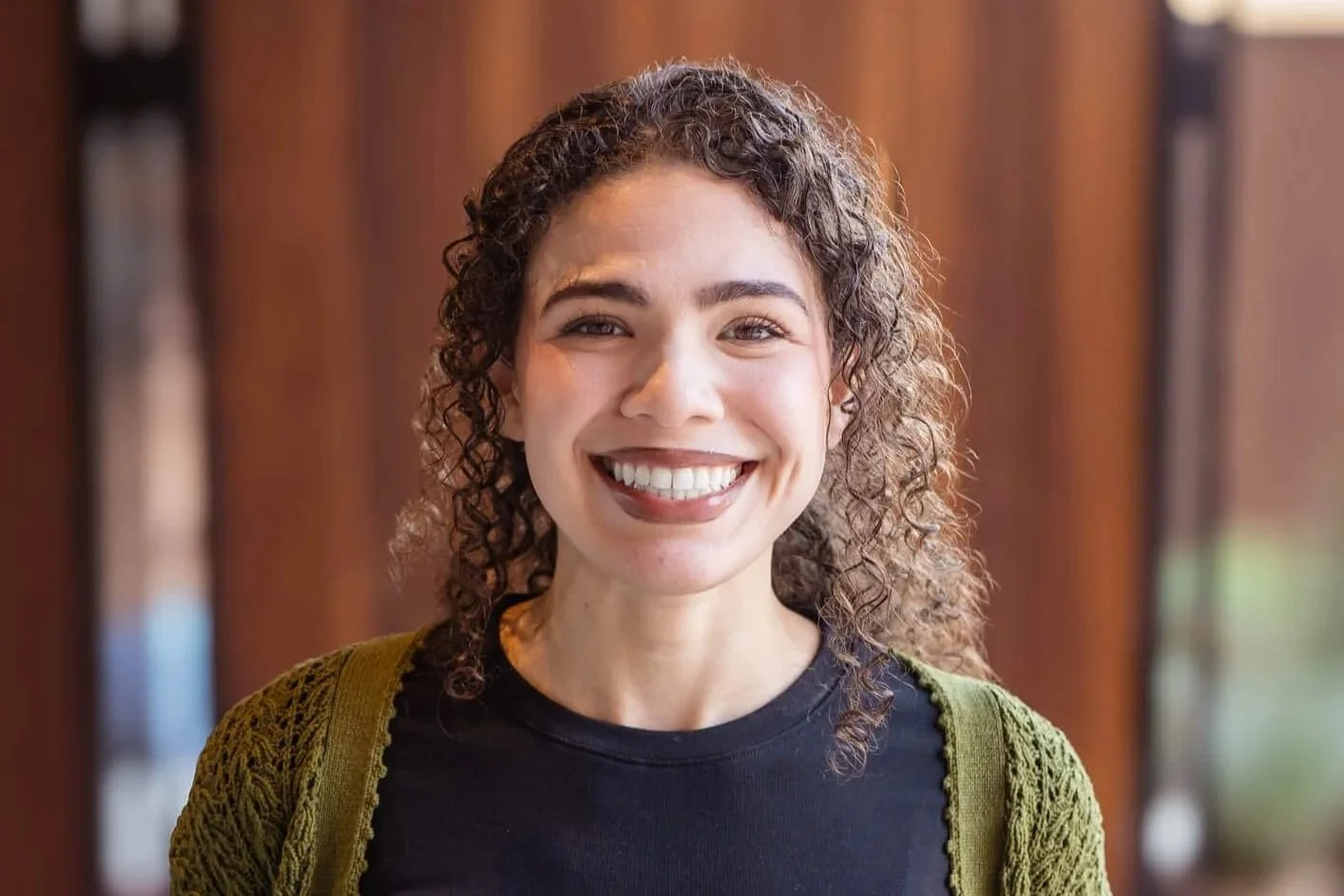
Madison Segarra, Graduate Student Trainee Therapist
Madison is passionate about helping people make sense of their experiences and find meaning in the stories they carry.
She brings a blend of curiosity, authenticity, and heart to her work and is drawn to conversations about identity, relationships, healing, and personal growth. Madison believes that transformation rarely happens in a straight line—it is often messy, deeply human, and sometimes a little magical.
Take Your Next Step Toward Support
If you’re navigating heavy relationship patterns, feeling the weight of dating, or ready to unpack generational cycles, you don’t have to do it alone.
At Kindman & Co., we make starting therapy simple:
Schedule a Match Call: Book a free 20-minute chat with our Care Coordinator.
Get Paired: We intentionally match you with the right relational therapist for your unique story.
Begin Healing: Start feeling more grounded, supported, and fulfilled in your life and relationships.
Holistic Individual & Couples Therapy in Los Angeles
Kindman & Co. is a human-first, identity-affirming group practice located in the heart of Highland Park (90042).
We provide specialized individual therapy, couples therapy, and premarital counseling to clients in Northeast Los Angeles—including Pasadena, Eagle Rock, and Glassell Park—and online throughout California.
Whether you are seeking LGBTQIA+ affirmative therapy, trauma support, or creative blocks, our team of warm and welcoming L.A. therapists is here to welcome you.