
On the Podcast: Why a Kids' Movie About Sheep Made Us Cry (And What It Teaches Us About Loss)
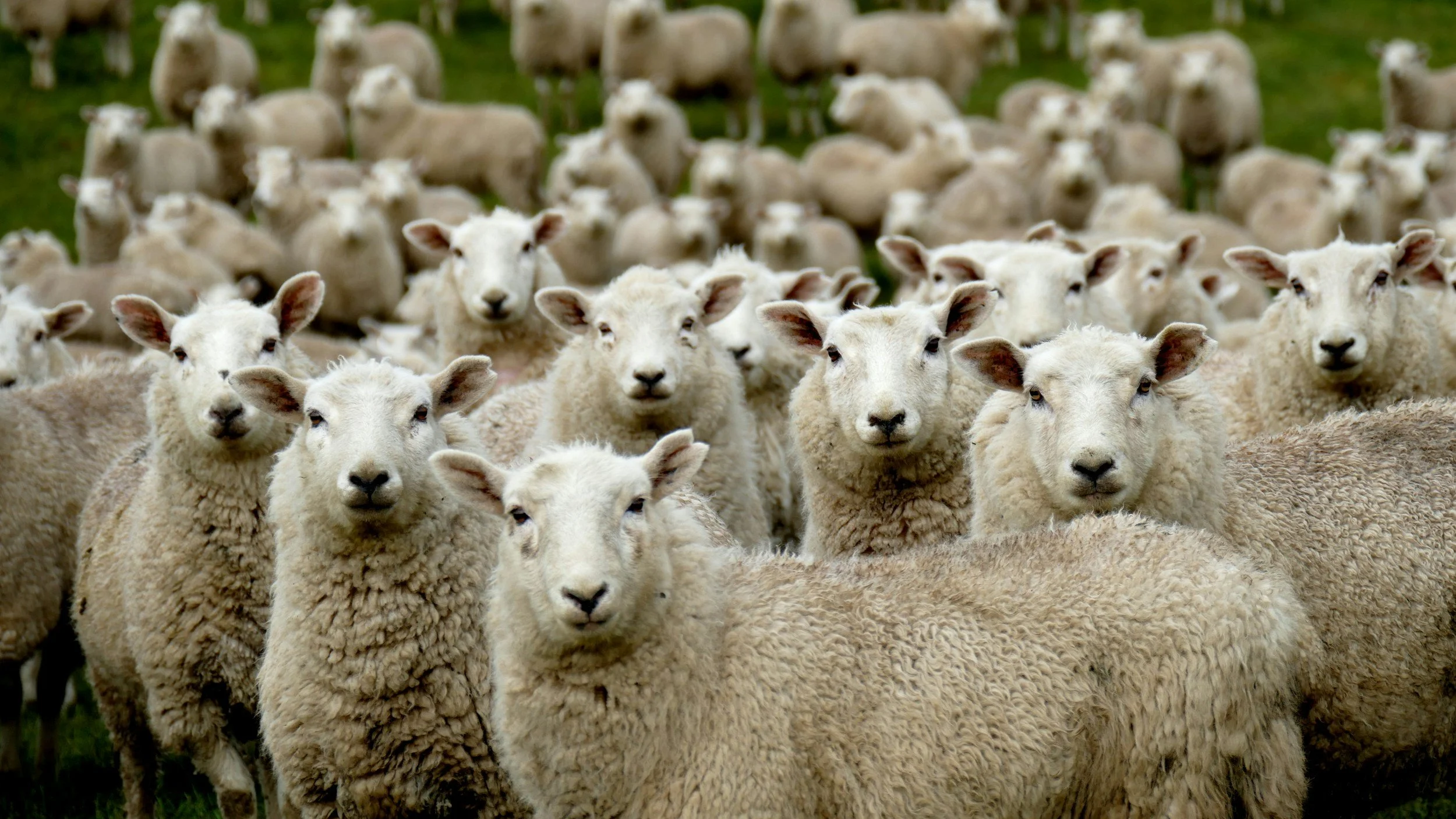
episode summary
In this episode of ‘Out of Session’ by Kindman and Co., hosts Anna and Paul talk through The Sheep Detectives — a film that tackles death, denial, and what it means to belong, wrapped in comedy and heart. They explore why avoiding grief always comes with a bill, and why remembering, even when it hurts, keeps us connected to each other.
[00:00:38] Anna: Hi. Welcome to Out of Session with Kindman and Co. I'm Anna, and I'm here today with...
[00:00:43] Paul: Paul.
[00:00:44] Anna: And we're really excited to talk about, the movie The Sheep Detectives, which, um, I saw on a whim. It's not typically the kind of thing I would go see, um, and was really taken aback by some of the themes, in that movie, and a- actually bullied, uh, both Paul and Kaitlin into coming to see it with me.
And I think it's important enough to have a conversation about, because, it highlights a lot of the themes that we work on in therapy.
[00:01:12] Paul: Yeah. And, and a little background, uh, I think both Anna and I see a lot of movies. Um, we're big fans of that medium. And yeah, this was not a film that I was expecting to see, especially in a theater.
And I only saw it because of Anna, and so I think it's fitting that we're sitting here together talking about it.
[00:01:33] Anna: Yeah.
Spoiler Warning
[00:01:39] Anna: And I, I think it's, um- Well, where do we start? I think if you're listening to this and you haven't seen the movie, you should stop. It's really gonna make it unpleasant for you to see it later.
You should come back. You should definitely go watch it right now and then listen to this afterward, but we're going to spoil everything. So-
[00:01:55] Paul: Or if you really don't care at all about spoilers and, uh, are just curious and you're gonna see it anyway-
[00:02:02] Anna: Sure ...
[00:02:02] Paul: then keep listening.
[00:02:03] Anna: Totally.
Themes Belonging and Death
[00:02:04] Anna: Yeah, 'cause I think, uh, really the, what's, what's obvious about the movie is that it's a murder mystery where sheep solve the crime.
But what's not obvious about the movie is that it has these two really central themes of what is it to belong, or like how do we find belonging, uh, and also death and what happens when people die and we love them.
[00:02:28] Paul: Yeah, which I, I think is unique. And not that, uh, you know, children's movies don't explore these topics, um, but, uh, I think the depth with which this film and the kind of, uh, the surprising depth, I think, with which this film did that, is something worth talking about.
[00:02:46] Anna: Yeah, 'cause I think there are certainly children's movies that deal with this theme. I mean, Up is the classic example, right? That opening sequence is profoundly heartbreaking. Right. Um-
[00:02:57] Paul: Or I'm thinking of like The Lion King.
[00:02:59] Anna: Totally. Bambi. Right. Um, I, I think the difference is that all of those movies are talking about death.
Um, maybe The Lion King talks about this a little bit, but like, I think The Sheep Detectives is more talking about relationship. And not just that someone dies, but what do you do with that someone dies?
Forgetting as Coping
[00:03:18] Anna: Um, because in the movie there's this sort of like plot point that the sheep, when something unpleasant happens, decide collectively as a flock that it is too painful and they would like to forget.
And this seems to range from like a minor inconvenience ... to something like death. And they count backward and then collectively all decide not to remember things anymore.
[00:03:40] Paul: Which is, I think is a, uh, even though it's, it's sheep doing this, I think it's, uh, actually a profoundly human thing.
[00:03:50] Anna: Totally, and there are even some implications later in the movie with the, um, twin sheep- that, uh, maybe even when we forget, we don't really forget. We're pretending to forget- Mm ... or we're trying to forget.
[00:04:03] Paul: Mm-hmm.
[00:04:03] Anna: But have we really, really forgotten? Which, I mean, sometimes I think denial can be an underrated coping skill.
Like, I do think there are some times in one's life when denial is really necessary. But denial of death in particular has a lot of risks and a lot of costs, and I think that's what the movie really talks about.
[00:04:28] Paul: Right. And, you know, to... As two therapists sitting here having a conversation, it's important to, to name, right?
Therapists generally pretty anti-denial- ... I, I think it would be fair to say.
[00:04:39] Anna: Sure, yeah.
[00:04:40] Paul: On, on the wh- on a whole. On the,
[00:04:41] Anna: on the whole, yeah. It, it... I would say it's not your best option most of the time.
[00:04:47] Paul: Though I'm really glad that you, you named, right? That, uh, it actually is an important tool in our toolbox, especially if it's a, a very short term-
[00:04:58] Anna: Yes
[00:04:58] Paul: tool.
[00:04:59] Anna: Yes.
[00:05:00] Paul: Right? It beg- it becomes, um, problematic, uh, when it is overused and used in the long term.
[00:05:10] Anna: Mm-hmm. Yeah. There, um, I once heard a therapist say, "You can, you know, do whatever you want to deal with things, use whatever coping skill you choose." Um, the bill will always come.
[00:05:22] Paul: Mm-hmm.
[00:05:23] Anna: Um, and denial feels like one where the bill is just quite large.
[00:05:27] Paul: Uh, well, and grow, I think grows over time. Right,
[00:05:29] Anna: exponentially. Compounded interest.
[00:05:31] Paul: Exactly. Exactly.
[00:05:35] Anna: Which is what we see play out in the film, because this protagonist sheep, Lily, she's kind of a Leslie Knope of a sheep. Um, and she really, when both her shepherd dies, but also when, um, her sheep friend dies, she's really trying to forget.
The other thing that's worth mentioning is this, uh, the idea that the sheep have collectively created that sheep don't die, they turn into clouds. Which I think is another, like, real parallel to human- like dealing with death, that people are m- extremely uncomfortable, even with the word died.
Right. Um, people will say passed.
[00:06:13] Paul: Right, passed on. Yeah.
[00:06:14] Anna: Mm-hmm, passed away. Yeah. Um, and I, I think part of that is just that it's really hard to sit with the reality of it.
[00:06:23] Paul: Mm-hmm.
Mopple the Rememberer
[00:06:23] Anna: Um, but, uh, the movie has this really lovely character, Mopple, um, who just can't forget. He has lost the ability to forget- Mm ... and has to remember all of these things.
And you can see the tension that that causes him throughout the film, um, when everyone else is using this coping skill that he doesn't have access to, and he knows that sheep don't become clouds. But for a while feels like he has to keep that up to protect everyone else.
[00:06:54] Paul: Right. Well, and m- maybe in some way also to, to continue to belong and to be a part of the flock.
Right. It, it's hard to be the one voice, uh, that's encouraging, right? The one different perspective.
[00:07:08] Anna: Yeah, and I think part of what stood out to me about this movie was, um, when I'm working with grief clients, that is often a feeling that they have, that they are the Mopple. That they- Mm ... um, by being aware of death in this different way, are a bummer, they're bringing people down, they're hurting other people, burdening them.
And I think that's part of what I loved, is that I, I would argue that Mopple is like the hero of the film. That by being able to sit with this, he, he really conveys the truth, which is that if you lo- if you forget something, yes, you avoid the pain in some way, but you also lose all of the good things.
Like, there is no way to selectively forget.
[00:07:54] Paul: Mopple uh, turned me into a puddle. He was the one. Right? I, I knew that there was, I, I knew because Anna... And by the way, when, when I saw the film, I was seeing it for the first time, uh, along with my wife, Kaitlin, and Anna was with us, seeing it for the second time.
Um, sorry to out you. It's all right. Um, how, how many more times have you seen it since then?
[00:08:16] Anna: Um, it, I did only see it the two times, but I would watch it again.
[00:08:21] Paul: And I knew there was gonna... I mean, uh, I knew because Anna loved the film, that there was gonna be, there was gonna be an emotional punch.
[00:08:29] Anna: I have a reputation.
[00:08:31] Paul: And you know, you know, for the first little part, I was like, "I, I don't know. I don't know if this is gonna... Is this... There's a bunch of talking sheep. I don't know if this is gonna get me." Um, and then there was a scene where Mopple uh, talks about, uh, essentially being, uh, the holder of all of these memories for the flock, the one who's been carrying this for them.
And he, and he describes it, again, just so eloquently, so simply, in a way that I, I think a kid, like, in a really accessible way that a kid could understand, um, and an adult who's open, will, again, will turn into a puddle- Mm-hmm ... like, like I did.
[00:09:12] Anna: Yeah, I mean, that was also the scene that got me, but, um, actually just before the part that Paul is mentioning- Mm
when, this very important sheep in the flock sacrifices his life- Yeah ... to protect some of the others. Thus kind of, like, outing himself as really a member of the group- Mm-hmm ... right? That, like, "I would die for you all- Mm-hmm ... because you're my flock." Um, and literally, this, this main sheep is, um, sort of shaking his dead body saying- Mm
like, "Turn into a cloud." Mm-hmm. "Why aren't you turning into a cloud?" And I think- Mm ... that's just so painful. And the part that got Paul is just directly after that, and it feels worth mentioning that when we saw this together- Mm ... um, during that scene, which is, like, the denouement of the whole film- Mm
um, the people in front of us got up to, to go eat or something. Oh, right. To, like, they were like, "I, I gotta, I gotta go get my nachos." And I thought, "Oh, wow, people just cannot tolerate this, even in sheep." Like, we can't stay with this just devastating loss.
[00:10:16] Paul: Right. It's, it, it's hard, right? I think we can, we can validate and normalize that, uh, it is genuinely difficult to sit with the idea of death.
[00:10:30] Anna: Totally.
[00:10:32] Paul: Right? Whether, whether it's happening in our own lives, um, uh, in our communities in a larger way, or, right, uh, deeply personally, people who really, really matter to us, or when we're watching some cartoon sheep, um, on a very big screen, uh, uh- That feel really real.
[00:10:56] Anna: Mm-hmm.
Grief and Real Life Loss
[00:10:57] Paul: Um, and, and I think it, yeah, it's worth mentioning, we've...
Sitting, both of us sitting here, we both lost important people in our lives. Um, I know for me, especially this time of year, there are a lot of painful anniversaries. And it's, uh, it's genuinely hard to sit with, to connect with, to think about, these people who I love.
[00:11:25] Anna: Yeah. And, and again, it can feel very isolating, when I think the, the great irony is that, like, as soon as you lose someone close to you, you're actually more a part of something.
Right? Like, you're connected to the whole of human history, where people- ... have just been losing people. And, like, death is a part of life. And, um, it, it... We also, um in researching for this podcast, found an article written by the director of The Sheep Detectives- Mm ... Kyle Balda, um, about losing his own mom. And how part of what resonated about the script to him was, that he sort of had a denial process- that he went through, um, in trying to sort of not, just not be in touch with that pain. And that Mopple, when he's r- arguing for remembering, says something like, "I remember my mother's face."
[00:12:20] Paul: Mm.
[00:12:21] Anna: And I think, like, that's, that's the case. Right? It's like, it's, it's worth remembering these things. They connect you to not just the people that you've lost, but to all the other people who've lost people.
[00:12:35] Paul: Mm-hmm.
[00:12:35] Anna: Which, for the record, sorry, will eventually be all of you.
[00:12:39] Paul: Yeah, all of us. Yeah.
[00:12:41] Anna: Mm-hmm.
[00:12:43] Paul: And, and per- I mean, I, uh, speaking just personally, I- some of the most painful... I mean, a- aside from the acute pain right after a loss, uh, some of my most painful experiences in, during the grief process, and why I resonated with this film so much, is when I've recognized that I have forgotten, or my memory, I can't very easily bring up a detail about someone, an experience with someone who I absolutely adored, and it feels like a, a loss-
[00:13:20] Anna: Mm-hmm
[00:13:20] Paul: yet again.
[00:13:21] Anna: Yeah. Yeah.
Cloud Metaphor Meaning
[00:13:24] Anna: But I think that's also, like, part of what happens in the film is that there's this narrative about sheep turning into clouds, which they obviously do not. They die.
[00:13:33] Paul: Uh, spoiler.
[00:13:33] Anna: Um, and at the end they do actually. Sebastian- Mm ... this sheep who dies in this painful way that some people have to go get nachos during
um, turns into a cloud. Mm. Lily sees him there. And I think, like, that's such a nice metaphor because I do think we practically in some ways lose memories of people. And they become th- something else, whether you wanna think of it as a cloud or they're in heaven or a spirit or a ghost, whatever your conceptualization of that is, um, they become, like, more than a person.
Mm. Um, and that, in that way, they lose some of their humanness, their particular details. Mm-hmm. Um, but they actually gain something else, something bigger. Hmm.
[00:14:29] Paul: That's a... I like that way of thinking about
[00:14:33] Anna: it W- and I think that that's the whole, like, I'm always looking for new metaphors and different ways to think about grief because I think it's different for everybody. And there are these sort of through lines of what the work requires when someone dies.
You have to figure out how to live with that. And I think often people don't want to or they don't know how. Um, and as a society we've done a terrible job. We've, like, abandoned every ritualistic support- Mm ... that we had for people who have lost someone. But, uh, like, I just think this film is a really interesting different take on making meaning that is, as Paul said, so accessible.
Like, you could explain that to a kid. That sheep don't turn into clouds.
[00:15:20] Paul: I mean, I, I think about all of the, the stories our society, uh, w- whether it's through religion or spirituality, right, like, we come up with that for what happens after. Mm-hmm. And, um, you know, this idea of turning into a cloud is a, is kind of a metaphor, right, for all of the ways that humans deal with-
[00:15:39] Anna: Mm-hmm
[00:15:40] Paul: um, not having to like you were saying earlier, not having to accept the reality that, um, this person as they existed is no longer.
[00:15:50] Anna: Yeah.
[00:15:50] Paul: Right? They exist, um, in the memories that we created together.
[00:15:56] Anna: Mm-hmm Yeah.
Winter Lamb and Belonging
[00:16:01] Anna: I mean, I'm also just thinking about, one thing we haven't mentioned, just to spoil the movie further-
um, is the winter lamb.
[00:16:07] Paul: Mm.
[00:16:07] Anna: That really this film is taking on belonging both on, at the end of life, but also at the beginning of life- Mm ... um, and how often we, we make stories that make other people not belong- Mm ... from the very start. And you see the flock's, resistance to incorporating a new member- Mm
based on sort of, like, sheep lore- Mm ... about when a sheep is born. And then sort of the realization that they all come to throughout the story that, um, actually maybe that wasn't true either.
[00:16:39] Paul: Right. These are sort of stories. Um, um, uh, I, I had this, um, training back in the day where we talked about, a- again, just the power of story and how, uh, whether it's the stories that we read or stories that we watch, but also stories that we have about being a person- Mm
being a human being, right? Culture, uh, is a story about, uh, what it means to be a person. And all cultures have these stories of connection, and they have stories of separation.
[00:17:12] Anna: Mm-hmm.
[00:17:12] Paul: Right? And, and I think it's very natural for human beings to have stories of separation. We're tribe- we're tribal creatures.
[00:17:20] Anna: We're a flock.
[00:17:21] Paul: Right. Right. We're many, many flocks. And now, as societies of, you know, f- especially living in the United States, right, we're this massive society that's trying to i- imagine that we're one flock, and...
[00:17:36] Anna: And are we?
[00:17:37] Paul: Are we? Right. So there's constantly these stories of us and them.
[00:17:43] Anna: Mm-hmm.
[00:17:44] Paul: And this movie really, again, re- uh, takes that on.
[00:17:48] Anna: Yeah. Yeah. I mean, it's really, it's really a big film- ... actually for being a, a live action sheep movie. I think that's... Like, everyone that I tell, I've recommended this to so many clients, and the response I get is pretty much universally like- Yeah ... "What?"
[00:18:08] Paul: I mean, to be fair, that was my response.
[00:18:12] Anna: Yeah. But really, like, there is something just so profound about a- about a f- a group of individuals who have their own personalities and are going through their own, like, foibles in life, trying to figure out, like, how do we wanna be a group together?
Who's, who's gonna set the tone? Who's gonna be our shepherd? The film also, like, pokes fun at religion- Mm-hmm ... and, like, some of the, maybe more confusing elements of, like, belonging in that context. I don't, I don't know. I just think that it's rare that something so simple can take on such big ideas.
[00:18:53] Paul: It's very well said. By far the, the kind of the, the movie that surprised me the most that I've seen this year, and the one that I think I've rec- I've recommended to more people, uh, than, than any other.
[00:19:08] Anna: And how do they respond?
[00:19:11] Paul: What?
Okay. There's a kind of like a, a patting me on the head.
[00:19:18] Anna: Sure. Sure. Like, yeah, weirdos. Like
But I think, I mean, part of why I wanted to do a podcast about this is because I think that art is one of the best ways to think about death. Because it is really scary and confronting, and I, I think that we all would like to forget, and we all do forget at different points. There is actually no way to not forget.
It's a little bit like meditation. Like, you can never be wholly present. You would explode- ... or become Buddha. Which if you've done that, that's kudos.
[00:19:56] Paul: Yeah.
[00:19:56] Anna: So I think that, uh, there's something just so human about The Sheep-... that I wish more people could see.
Mopple as Therapist
[00:20:14] Anna: I, I also think that, you know, we practice relationally here, and we talk so much about the relationship with your therapist and what that means and, the work that you can do between the two of you.
And this movie, I mean, in a weird way, Mopple is like Lily's therapist.
[00:20:22] Paul: Mm-hmm.
[00:20:22] Anna: You know? Like, he sort of, he sort of meets her where she's at in the beginning. And then he's kinda like, "Oh, c- what if we didn't forget?" Um, like, "C- c- no, come on, please." Like, "I'm advocating for not forgetting."
And she's like, "No, no, I'm gonna forget anyway." And he's like, "Oh, okay." Um, but he doesn't give up on her. And he sort of like, uh, coaches her through this death. He's like her death doula- Mm-hmm ... and then is really, like, helping her connect to her authentic self.
[00:20:51] Paul: Hmm.
[00:20:51] Anna: So maybe that's what I found so compelling, but it's, there is also a, a sheep therapy happening-
that parallels the kind of work that we try to do here.
[00:21:01] Paul: Yeah, I like that, and I agree.
Comedy and Complexity
[00:21:03] Paul: And, uh, the one thing I would add is, and what we ha- maybe haven't mentioned, uh, is that this is a comedy.
[00:21:10] Anna: Oh, yeah, no, and, and a m- and fun-
[00:21:13] Paul: funny. And a m- and a m- I mean, it's a m- right, you mentioned it's a murder mystery, but it, but there's so much humor and silliness throughout this movie, even though we're talking about these really heavy, themes.
And I think that's another way that it mirrors the kind of work that, that both that we do here, uh, but also m- And I think it's necessary to connect with levity and playfulness and silliness w- while we're trying to connect with the deep, dark, heavy pain. That we need both. Because if we go too far in one direction, right, we're, we're avoiding something.
[00:21:55] Anna: Right. That's a forgetting.
[00:21:56] Paul: Mm-hmm. And it, I think it just, it- it's another way of advocating for this idea of holding complexity, which is just, I think we talk about a lot here. Uh, we really think it's ju- it's central to this concept of mental health, that we need to be able to hold multiple, realities, multiple experiences, multiple feelings at the same time.
[00:22:20] Anna: Mm-hmm. Yeah. That that's actually what we're going for. We're not going for be happy all the time or be productive all the time. We're actually trying, how can you sit with, like, all of it?
[00:22:33] Paul: Mm-hmm.
[00:22:33] Anna: Just the way that it is right now.
[00:22:35] Paul: Mm-hmm.
[00:22:36] Anna: With me here.
[00:22:37] Paul: Yeah. And I think a, a, a big fear that people have, and I think we're really, we're advocating for, we need to talk about death.
We need to talk about loss. We need to talk about these experiences. And one of the things that really scares people is, um, that that's all it will be.
[00:22:54] Anna: Hmm. Right. That you're gonna come to therapy and we're just gonna destroy you week after week.
[00:22:59] Paul: Just nothing but pain.
[00:23:01] Anna: Mm.
[00:23:02] Paul: And I will get stuck in that pain, and I will not feel anything else.
And I think what we're advocating for is that actually that wouldn't be the way to do it.
[00:23:14] Anna: No, because then you're stuck.
[00:23:16] Paul: Right. That we need to access, uh, our playful selves. Our, some- sometimes, I mean, I know one of the things that you and I, Anna, share is a dark sense of humor.
[00:23:30] Anna: Mm-hmm.
[00:23:31] Paul: Um, that is such a resource.
[00:23:34] Anna: Yeah. It's good. And I think we need it in particular. Yeah.
Humor as Connection
[00:23:37] Anna: P- Paul and I f- are probably the most active, um, news refreshers on our team. Deep sigh. Yeah. We're, we're working on it. But I think, like, part of how we manage that together is through humor also. Um th- there is no way to just sit in the heaviness-
and, and make it through. Um, the other thing about humor is, like, yes, we can make jokes to ourselves and find things funny on our own, but really, actually, humor is a shared-
[00:24:10] Paul: Mm-hmm ...
[00:24:11] Anna: experience. Um, it, things are not really funny al- alone. I was reading an article about, like, increasing, um, screen time and all these things.
And that one of the things that's being lost is that- Mm ... um, people used to sit around and watch things together or play things together and laugh together. And now people are more often sitting on their phones- watching a video, laughing alone. And that actually, these just don't activate the same parts of the brain.
It's not the same experience. Um, and yeah, that, like, therapy can also be a place where you get to do that with someone else.
[00:24:50] Paul: I think that's so true. I, uh, like many couples, I think my wife and I often are, find ourselves on the couch both looking at our own phones.
[00:25:02] Anna: Even the Kindmans, friends.
[00:25:04] Paul: Even us.
Even us. And, when I see something that makes me chuckle, the very first thing I do is, "Hey, Beth." "Hey, Beth, watch this with me." Hmm. "Look at this with me."
[00:25:18] Anna: Right, because it's funnier. It's, it's- It is ... better with someone else.
[00:25:21] Paul: Yeah.
Final Takeaways and Goodbye
[00:25:22] Paul: I'm looking at time, and I think we should start wrapping up this conversation.
My hope that your takeaways are, uh, that if... Well, first of all, that if you've seen, already seen The Sheep- Sheep Detectives, that you found this resonant in some way or that it highlighted something that maybe you already, uh, felt, uh, and experienced when you saw it. Um, if you haven't seen it, I hope this has encouraged you to, uh, run, don't walk, uh-
to go, to go see it. And my hope is that it's, uh, it's an impetus to connect with someone in your life to talk about death and loss. Because this is something that we've all either experienced or are going to experience, and I think we have to be able to talk about it.
[00:26:13] Anna: Yeah, and, and that, like, forgetting doesn't work.
It's not, it's not the way. There are very few things in therapy that I feel extremely directive about, and this is one of them. Like, that's not gonna... It won't help. Yeah. It will help for a time, and then it won't. Yeah. And you will have to figure out what to do with that and how you want to remember people.
So yeah, I think the invitation to connect with someone, whether that's a friend or a therapist or, uh, I don't know, someone, a stranger sitting next to you- Hmm ... in the late screenings of The Sheep Detectives- ... which I imagine will be far less full.
[00:26:54] Paul: Yeah, yeah. The desire to forget is so reasonable, and the message is, just because you wanna...
[00:27:04] Anna: Doesn't mean we turn into clouds.
[00:27:07] Paul: Yeah. Well, thanks, Anna. Thanks for talking with me about this.
[00:27:10] Anna: Yeah. We'll, uh, catch you all soon.
[00:27:14] Paul: Okay. Bye now.
[00:27:16] Anna: Bye.
Today's episode is bringing you to our new therapy and support group, “Dead Parents Club.”
This is a bi-weekly young adult therapy and support group in Highland Park for people navigating the loss of a parent or close parental figure.
Yeah, the name is a little blunt. Maybe even darkly funny?! But if you’ve lost a parent young, you probably get it.
This is a space for young adults trying to figure out life after a loss that changed everything — while everyone else somehow seems to keep moving forward normally.
And don’t let the word “therapy” freak you out. You don’t need to show up with the perfect words or know how to talk about grief “correctly.”
Think of it more like a place to land with people who actually understand this kind of loss.
You can find out more about the Dead Parents Club here.
Featured therapist speakers:


I believe distress is often your nervous system's way of telling you that something isn't working. Not because you've failed, but because your relationships, culture, or environment aren't supporting your humanity.
Humaning is hard!
We live, we stumble, we hurt, and we heal.
My purpose as a therapist is to help you make sense of what's happening inside and around you, and to find the resilience and self-understanding we all need to navigate the messiness of being social and emotional creatures.
As a grief therapist in Los Angeles, I want to help you figure out who you are even amidst transition, loss, pain, and other disasters.
My purpose as a therapist is to help you expand your emotional experience—to appreciate not only joy and happiness, but also to welcome more challenging emotions that will help you feel more authentic, clarify your values, and build meaningful and supportive connections with others.
GET HELP NOW
If you are interested in therapy with Kindman & Co. and would like to learn more about the services we have to help you, follow these quick & easy steps:
Schedule a free 20-minute phone consultation with our Care Coordinator.
Get matched with the therapist who’s right for you.
Start feeling more supported and fulfilled in your life and relationships!
THERAPY AT KINDMAN & CO.
We are here for your diverse L.A. counseling needs. Our team of therapists provides lgbtqia+ affirmative therapy, couples therapy & premarital counseling, grief & loss counseling, group therapy, and more. We have specialists in trauma, women's issues, depression & anxiety, substance use, mindfulness & embodiment, and support for creatives. For therapists and practice owners, we also provide consultation and supervision services! We look forward to welcoming you for therapy in Highland Park and online.