
On the Podcast: Fixing the Unfixable - We Got This (Even When I Don’t Got It)

episode summary
In this episode of ‘Out of Session’ by Kindman and Co., hosts Paul and Dani sit down in a very real, very human place: tired, grieving, a little cynical, and unsure they “got it” today. What unfolds is an honest conversation about what happens when life hands you things that can’t be fixed — persistent grief, chronic stress, old childhood loneliness, the slow drip of exhaustion.
Together, they wrestle with what it means to support clients, friends, and each other when there’s no clear solution. At the heart of the episode is a simple but powerful shift: moving from “I don’t got this” to “We got this.” It’s a conversation about borrowing hope, showing up imperfectly, and discovering that sometimes connection — not fixing — is what actually transforms the moment.
[00:00:00] Paul: Well, I guess this is it.
[00:00:06] Dani: Welcome.
[00:00:10] Paul: Hey, welcome everybody. Welcome Dani.
[00:00:15] Dani: Hey, Paul and Wheezy just hanging out on the floor.
[00:00:20] Paul: I being extra cute with her bangs.
[00:00:23] Dani: She does have some like seventies bangs right now.
[00:00:29] Paul: I'm impressed she can see anything.
[00:00:32] Dani: Well, who knows what she can.
[00:00:38] Dani: How you doing mom?
[00:00:41] Paul: How am I doing? Uh, I'm tired. I feel like that's been a, a really common refrain lately.
[00:00:54] Dani: Is that like on a soul level or what kind of tired.
[00:01:00] Paul: Yeah, I think it's in, like, in a number of levels. I mean, certainly on a, just a body level, like not enough sleep and dealing with my gut that just every time I think it's gotten a little bit better, takes a little step back.
Reminds me that, nope, not quite there yet. Um, and then it takes a lot of energy just to be a person these days.
[00:01:31] Dani: It really does. And you didn't get much sleep last night because of your cat?
[00:01:37] Paul: Yeah. A very cute cat. But yeah.
[00:01:43] Dani: Making biscuits all night.
[00:01:47] Paul: She likes to do it on my neck. It's uh, it's an interesting spot. It makes it hard to sleep.
[00:01:56] Dani: I would think so.
[00:01:58] Paul: Yeah.
Dani on Grief
[00:01:58] Paul: How you doing, Dani?
[00:01:59] Dani: Um, I feel like the way that you describe your gut is how I feel about my grief right now, where it's just, um,
I know it's gonna just be there and I think I'm waiting to just hold it differently, but
some days I can. And the different feels relieving. And then sometimes I hold it and it feels impossible. So I think like last night felt impossible. And then show, I was like, we gotta do this podcast. I was like, I'm gonna show up for Paul and all of our listeners, the thousands of people.
[00:02:46] Paul: Look Dani people depend on us to show up and do this podcast.
[00:02:52] Dani: Just waiting comments. Like, when's the next one? When's the next one? I'm sorry.
[00:03:01] Paul: Um, well if you're out there listening, this is your lucky day. 'cause this is it.
[00:03:07] Dani: You know, I'd feel really bad if there was like one consistent listener and like every podcast we're like, if there's anyone out there. And the whole time they're like, it's me. I've been here, I am waiting. When is the next one?
[00:03:23] Paul: Yeah.
[00:03:23] Dani: You should email, uh, can you email us?
[00:03:25] Paul: Yeah. Yeah. It's really hard 'cause this, this medium, it's, it's kind of a one way conversation. Like, I mean, obviously you and I are talking to one another, but we're also talking to a theoretical listener out there. Uh, but we don't know if you're there.
[00:03:42] Dani: Something about what you just said reminds me of people praying.
If there's anyone out there. Are you listening?
[00:03:52] Paul: Is this what we're doing?
[00:03:57] Dani: I don't think if it is, I think I might wanna stop.
Wanting Fixes
[00:04:03] Paul: Well, it's actually, I mean, it's interesting that you say that, right? 'cause we were talking about maybe having a conversation about kind of how to approach things that can't be fixed. Mm-hmm. And uh, I think prayer has been a pretty popular way to go about things for many, many people.
[00:04:29] Dani: Do you think. In a way of like hoping for a fix or,
[00:04:38] Paul: Hmm.
Well, I know it, it's, I mean I'm, I've never been a particularly religious person, but I've certainly found myself praying in various different ways throughout my life.
[00:04:54] Dani: Hmm.
[00:04:56] Paul: And I think it has been in moments where I've. I really desperately wanted something to be different.
[00:05:08] Dani: Please change. Please fix. I mean, in a not funny way, like if literally anybody is listening universe a spirit.
[00:05:19] Paul: Yeah,
[00:05:20] Dani: somebody a higher power, please help fix. Hmm. I mean, I, I can definitely tap into those places of just like desperation. It's actually really interesting that we've landed on religion.
[00:05:38] Paul: Hmm.
How so?
[00:05:39] Dani: Uh, I think just knowing, uh, things that you've shared of like how you feel about religion, um, and spirituality and then just considering. My life being raised as Catholic and sort of where I land with things.
Um, but when I want something to change and I want something fixed, I don't even know what I do anymore.
I think maybe I'm in like resignation or acceptance of just like, this is my life. That's how I feel about grief. Like, this is mine. I will carry it forever. Not in a. Hmm, this is mine. I will have this. Hmm. I must care for it. But in a, here we go. Another thing. Thank you universe.
[00:06:30] Paul: Hmm.
[00:06:31] Dani: It's a bit cynical and sarcastic.
[00:06:36] Paul: Yeah, I can relate to that.
[00:06:37] Dani: Carrying my grief around like, oh look, fun, new accessory. Thank you. I actually, I needed this. I needed, I needed this.
[00:06:46] Paul: Yeah. Well, lucky for you, the, the universe or God or whatever it is that you're, you're. Talking to, uh, speaks sarcasm fluently. They, they, it knows exactly what you're saying.
[00:06:57] Dani: Yes. Well, they should really be listening to, to sort of, uh, stop handing me shit.
[00:07:06] Paul: Hmm.
Acceptance vs Resignation
[00:07:07] Paul: I, I mean, hearing you, hearing you say that, and I, I, I think I relate in a lot of ways, but, and, but hearing the kind of the two words that you used. Acceptance and resignation. And to me, when I hear those two, they sound like, um, maybe they're on the same spectrum of experience, but they're maybe on opposite ends.
[00:07:35] Dani: Hmm. Opposite ends of
[00:07:40] Paul: kind of this spectrum of a similar experience where I guess I think of. Like resignation as a relatively hopeless
[00:07:53] Dani: mm
[00:07:55] Paul: way of approaching something that just is, and acceptance is maybe a slightly more hopeful.
[00:08:07] Dani: That is so true, and I don't know why I put them together. Even when he said that, I'm like, I don't, I actually don't know what you're saying, Paul, but it is true.
They are distinctly different.
[00:08:20] Paul: But I think they're like the same family of experience. 'cause it's just like we are, we're dealing with something that is, and the difference is, is like how we're, how we're approaching it, how we're allowing it in.
[00:08:40] Dani: I think what comes to mind is like how I offer, um, when you said hope, what popped into my mind is like how I offer support to friends, and I think it is in a very like accepting, validating. Yeah, of course this sucks. I'm not the like, hope giver, the motivator. I'm just like, no, actually this is pretty shitty.
And I think that's very validating for some people. But I don't think that I'm necessarily the friend to go to if you want like a pep talk or, um, you, you know, it is gonna get better.
[00:09:19] Paul: Mm-hmm.
[00:09:20] Dani: I think there's few things that I feel confident in where I could tell somebody like, it's gonna get better.
[00:09:26] Paul: Yeah.
Hope Merchant and Gratitude
[00:09:26] Paul: I've never thought of you as a hope merchant.
[00:09:29] Dani: Ooh, hope merchant. It sounds like a fun job though. Instantly intrigued. Are you a hope merchant?
[00:09:39] Paul: Um, I think I can be. And I don't know if I like that part of me.
[00:09:45] Dani: Hmm, that's fun. I got excited about it. But you're like, I don't know if I like this one.
What's not to like?
[00:09:55] Paul: Like I, I think I, you know, we have a, we have a joke in our, uh, in our home that is sort of, uh, I think made its way into the office where, uh, my wife likes to refer to my, my Soviet optimism, which is, uh, just a sarcastic way of, of saying, you know, pessimism and naysay. Like, no, there's no way this is gonna work out.
Why even, why even bother
[00:10:25] Dani: Soviet optimism?
[00:10:26] Paul: Yeah. But there's actually a part of me that I think really copes with the difficulties and pain of life, uh, with maybe a little bit too much powdered sugar on top, sometimes
[00:10:46] Dani: Really sweetening it up.
[00:10:47] Paul: Mm-hmm.
[00:10:50] Dani: Hmm.
[00:10:51] Paul: And on one hand, I know on one hand I, I like that I can,
'cause there's different experience, there's different, different parts of this. Like on one hand I, I think I'm pretty good at being like, wow, this really sucks. And I can also connect to this other thing that doesn't suck as much that I'm actually kind of grateful for. And try to hold both of those at the same time.
Like, I notice often when I'm, when we're having a meeting and we're checking in and I go, oh, this, this thing sucks and this thing sucks and this is really hard. And
I got some really cute cats.
[00:11:34] Dani: That is true. It's interesting because you, I've had endless check-ins with you. Over the years, four years now. Who knows how many supervisions and meeting and whatever. And I don't feel you like just tossing that powdered sugar everywhere. But I think maybe it's because you start with here's this thing that's really hard.
[00:11:54] Paul: Mm-hmm.
[00:11:55] Dani: And I'm feeling really grateful. I think you frame it in gratitude often. And I'm really grateful for blah, blah, blah. But it is true. You do pair those things together often. Yeah. A hard thing and gratitude.
[00:12:06] Paul: Yeah, and I, I, I'm guessing that that's just a way that I've learned to, to deal with some of the, like, really painful, difficult, not so fixable things is by, by maybe momentarily shifting my attention or kind of adding into my experience also something that
I genuinely feel grateful for it.
[00:12:34] Dani: It does seem pretty natural to you. Hmm. And I think, like, I, I think I am surprised to hear, you know, the pieces or the piece of this that you don't like.
[00:12:48] Paul: Well, I, I think I just, and maybe my worry is that it comes off like insincere or I, or that I don't, um. Like, I don't want to kind of, when I'm not talking about my own experience or maybe somebody else's, I don't wanna kind of come off in this like, but it's gonna be okay.
Everything's gonna be fine. Everything will work out.
[00:13:16] Dani: Mm-hmm.
[00:13:17] Paul: Way, which, 'cause I don't know that.
And probably not. In fact, everything won't work out. I mean, that doesn't mean that you won't be okay, but. I'm pretty sure that everything won't work out the way exactly the way that you want it to.
[00:13:34] Dani: Yeah.
Even that though, I've had many conversations where you've told me some version where I'm like, Paul, this thing I just, I don't know what I'm gonna do. You're like, well, you did fudge it and, and then you add this and, and then I feel better. You know, there's something just hitting the validation and then, I think.
Oftentimes it's like, and we're gonna figure it out.
[00:13:58] Paul: Hmm.
[00:13:58] Dani: This isn't devastating.
[00:13:59] Paul: Mm.
[00:14:01] Dani: Knock on wood, then that can it, that, you know, not devastating comment continues. I don't wanna make any devastating mistakes.
[00:14:10] Paul: I'll knock on that wood with you.
[00:14:12] Dani: Thanks. But yeah, I, I appreciate your, it almost feels like reassurance.
It doesn't feel like, um, overpowering optimism or. Hope Merchanting.
[00:14:29] Paul: Well, that's helpful to hear. I appreciate that.
[00:14:32] Dani: Of course. I mean, as someone who sort of lives on the other end where I'm like, this sucks, this is gonna be my life forever.
[00:14:39] Paul: Mm-hmm.
[00:14:39] Dani: And the only person you got is you.
[00:14:42] Paul: Mm-hmm.
[00:14:42] Dani: You know, it is just, um, relieving to know that you'll be there or know that. Hmm. We can figure it out together or I could talk to you about something.
[00:14:55] Paul: Mm-hmm.
Shucks, Dani.
[00:15:03] Dani: You got a little glimmer in your eye right now, Paul, you're glistening.
[00:15:10] Paul: Yeah, I think it feels good to be that person and I mean, in this case for you.
[00:15:19] Dani: Yeah. No, I, I think that you have offered a lot of, we got this energy.
When I feel like I don't got it.
[00:15:31] Paul: Mm-hmm.
[00:15:35] Dani: And now I'm getting
a little glimmer in the eye.
[00:15:47] Paul: That's a space where we like to hang out together in the little misty space.
[00:15:53] Dani: Misty, it's getting misty. I can't see Weezys eyes because of her bangs, but I don't,
[00:16:00] Paul: she, she's misty under
[00:16:01] Dani: She's, she's for sure Misty.
Yeah.
Unfixable Problems in Therapy
[00:16:13] Dani: I mean, the truth is like a lot of life's things are not fixable. And I think that's a reality that feels sort of harsh, in meeting with clients when people are like really looking to us for answers. I need your advice, please. What do I do next? Um, I can happen with clients, but also friends. Like there is a major reach for support, but support looks,
often in their mind, like some version of fixing it.
[00:16:40] Paul: Yeah. I mean it, we picked this job where folks come to us to try and fix the unfixable.
And often I find myself in the position of kind of having to, help to reorient someone.
Uh, not to say, by the way, uh, dear listener,
we know you're out there. Uh, it's not to say that, um, everything is unfixable.
[00:17:12] Dani: Mm-hmm.
[00:17:12] Paul: Right? Some stuff is totally fixable and a lot isn't. I think that's what we're focusing on today, right? The stuff that. It is really persistent.
[00:17:29] Dani: Oh yeah.
Kitchen Drawer and Agency
[00:17:29] Dani: I love a easy fix or like a, I think that's what I like about sort of doing jobs around the house.
Oh, I'll put the nail in there and that frame is gonna get off a floor and on the wall, you know, like this thing is leaking. I got this. You know, it might be hard, but at the end, the satisfaction, oh my gosh, I fixed it. It's like, yes,
[00:17:52] Paul: it will be done. Yeah, there, there's a start, a middle and an end, and it's finished.
[00:17:57] Dani: Yes.
[00:17:57] Paul: And maybe I made a couple of extra holes that I didn't tend to along the way. Luckily the picture frame will cover them.
[00:18:06] Dani: Also fixable to some degree.
[00:18:12] Paul: Uh. But yeah, I, ugh, I am, I'm really feeling in this moment, just the satisfaction of a simple fix.
[00:18:22] Dani: Oh yeah.
[00:18:23] Paul: So, nice.
[00:18:25] Dani: And then there's like also the dread too.
I have this kitchen drawer. It's always a kitchen drawer. It's too heavy or whatever. It gets all messed up. Can't close it for, I don't know, a month. 'cause you know, I've been grieving and every day I'm like, fuck this drawer. I hate this drawer. I gotta go to the store, I gotta get this. It took maybe hmm, 10 minutes to fix.
But a month of me hating the drawer.
[00:18:51] Paul: Hmm.
[00:18:54] Dani: I wish I could get there faster with the things that I do have, like control and power over.
[00:19:01] Paul: Yeah. I mean, it's, it's such an important like, I don't know, source of just connecting to some kind of agency, like. I can affect change in my life via this fucking kitchen drawer.
[00:19:19] Dani: Ugh. I know. But when you're resigned, so that's like small level, but in a bigger level. When I'm resigned, it's like I have no power. I have no agency. Doesn't matter what I do. This will, it will be what it is.
[00:19:35] Paul: The drawer is bigger than me.
[00:19:39] Dani: Yes, the drawer is bigger than me. And then I don't know, how do you get out of resignation?
Fix it. Paul.
Getting Stuck in Yourself
[00:19:57] Paul: Actually, I mean, you asking that question is just genuinely inviting me to reflect on like, how do I do it? Because I don't sometimes.
[00:20:06] Dani: Hmm.
[00:20:08] Paul: I think that's, uh, sometimes that's where that, that Soviet optimism can really take over. And I,
I, and I, I think you and I are similar in, in, in, in this way, in that we can just kind of go into ourselves.
[00:20:28] Dani: Hmm.
[00:20:30] Paul: And momentarily, hopefully momentarily, but sometimes for a little while, forget that there are, uh, there are others who like deeply care about us and, uh, are willing to be in it with us. Um, and so I can certainly in, in some areas of my life just kind of.
Forget that. Get stuck in that place and go, well, I guess it's gonna be like this.
[00:21:06] Dani: I guess it's gonna be like this. And oftentimes that you are,
when you go into yourself, it's just you sitting with that.
[00:21:15] Paul: Yeah. all by my lonesome.
[00:21:20] Dani: Very, I get real pouty too.
[00:21:22] Paul: Oh, yeah, yeah, yeah. No, I will, I, I think I've, over the years I've learned to like, catch like signs of it.
[00:21:30] Dani: Mm-hmm.
[00:21:30] Paul: Like when it's happening, um, there'll be like almost this kind of like a repetitive thought pattern in my brain.
And I'm just having all these conversations with myself. Uh, yeah, and they're very pouty.
[00:21:45] Dani: That's when you know it's getting good. I'm just talking to myself for hours. Sorry, I'm having a conversation right now. Please leave me alone.
It gets real childish.
[00:21:59] Paul: Well, 'cause I, I, and I don't know if in your case, but. For, well, I know some of your, of course I know some of your story, but like for me as a kid, I think I was alone a lot as a kid, and in part I think the, that voice that comes out when I'm in that place is very much that kid.
[00:22:19] Dani: Mm-hmm.
[00:22:21] Paul: That felt to end
[00:22:23] Dani: trying to figure it out by yourself.
[00:22:25] Paul: Mm-hmm.
[00:22:27] Dani: When often kids just have less power and agency like.
[00:22:33] Paul: I mean, you think the world is big and scary now. You think that drawer is big and scary. Now what about when you're a little kid?
[00:22:41] Dani: Imagining like you little by yourself figuring out a problem or feeling like, oh my gosh, I can't do this. It was really sad.
[00:22:53] Paul: I mean, honestly, I mean, thinking about any, anyone, I mean, I'm, I'm taking that in. This is not a, this is not me deflecting
[00:23:01] Dani: any kid.
[00:23:02] Paul: Any kid. I mean, like, I think about you as a little kid feeling alone
[00:23:09] Dani: mm-hmm.
[00:23:10] Paul: And powerless. And I feel like so much compassion. For you.
Like I just wanna like reach out my hand and be like, do the, we can figure it out.
[00:23:26] Dani: We got this,
[00:23:27] Paul: we got,
[00:23:28] Dani: Ugh. That is like, I don't know what that, um, how to like, capture all of what that feels like when someone says like, we got this.
Yeah. But in a place of like resignation,
there's nothing that anybody can really say to like, fix that. For me, or to like, get me out of it. The whole thing is that I feel like I don't have power.
[00:23:56] Paul: Right?
[00:23:56] Dani: So somebody's sort of telling me like, you do, you got it? Know you got this, you can do it. It's like, I don't. I've been playing this conversation in my head so many times, like, I don't got this.
But to say like, we got this.
[00:24:10] Paul: Mm-hmm.
[00:24:10] Dani: Maybe I have more hope in you.
And then together we can sort of figure it out. I don't think I'm useless. I just think I don't have power, so let's use some of your power and we can do this. I'm like, okay, cool.
[00:24:24] Paul: Yeah.
We Got This Together
[00:24:24] Paul: I mean, I think that's such a big part of the power of.
Uh, therapy of like what we do at work every day, right. Is that whether it's, often it's a client sitting in front of us saying, I, I don't got it.
[00:24:41] Dani: Mm-hmm.
[00:24:44] Paul: And Right. And it's us inviting them to like actually be here rather than somewhere else in that I really don't got it place.
Um, and hopefully over time.
Allowing them to see that they're not alone in that place, that there's a we here. But I think we also do that with one another.
[00:25:08] Dani: Mm-hmm.
[00:25:09] Paul: Pretty often.
[00:25:13] Dani: Totally. I mean, I think of like just showing up today. Like us checking in before this, it seems like we both on our own, we're sort of feeling like, I don't got it today. I don't,
I don't. Got it. Yeah. But knowing that you would be here and we'd figure it out, I'm like, I think we got it. I don't got it.
[00:25:40] Paul: It's amazing how similar our experiences were leading up to this conversation.
[00:25:50] Dani: Yeah.
[00:25:50] Paul: 'Cause I was like, I told Dani I would be here. I gotta be here.
[00:25:56] Dani: I know. And the thing is like, I think having known you for some time now, I think we both know that the other person is like forgiving and it would be fine
[00:26:11] Paul: mm-hmm.
[00:26:12] Dani: To not got it. And not show up. Hold that without shame. And just be like, yeah, no, totally. Life is hard right now. Let's figure this out. But I do love that we both were just like, I told Paul I gotta show up. There is like a reliability that I think, um
oh, showing upness.
We've talked about showing up. And I think I've had like a lot of really great models for that.
Showing Up Changes Everything
[00:26:36] Paul: Well, there's also something that, um, and I think I'm experiencing it right now, just sitting here having this conversation with you, kind of feeling a bunch of feels and feeling actually really connected to you.
I think there's a wisdom in that kind of a showing upness that even though in the moment where I'm just like, I don't, I don't got it. I like, if it was just me doing this, I'd be like, nope. No, thank you. Pass. Yes. Um, but. If I show up for my friend, it might actually meaningfully transform my experience.
And like in this moment, sitting here having this conversation with you, I'm not mired in the, ugh, I didn't sleep enough last night. Ugh, the world is. So depressing and is crushing me. Ugh. My guts are not working the way that I want them to. I'm just sitting here and being like, I love Dani.
[00:27:42] Dani: Hmm. That's very sweet.
Paul, I love you.
Who knew that? Just like showing up even though you weren't your full self. And saying like, Hey, this is all I got is enough.
[00:28:01] Paul: Who knew?
[00:28:04] Dani: I think I know when it's about somebody else, but when it's about me, I just sort of forget.
[00:28:15] Paul: There's a lesson in here somewhere.
[00:28:18] Dani: I would summarize it if I could, but we'll let the listener choose their own path.
[00:28:25] Paul: Yeah, yeah. No, I think we, we trust the intelligence of our listener to figure.
[00:28:32] Dani: Yes.
We Got This
[00:28:34] Dani: Well, thanks for sitting with me, Paul, and showing up.
[00:28:37] Paul: Hey, thanks. Thanks for doing this with me. Thanks for giving me the, uh, the inspiration to show up today.
[00:28:45] Dani: We got this.
[00:28:47] Paul: We got this.
Today's episode is bringing you to a friend you’ve been meaning to text or wanting to show up for. We encourage you to reach out and remember that borrowed hope is powerful and showing up imperfectly can transform the moment.
Look out for the transcript of this episode on the Kindman & Co. blog and sign up for the Kindman & Co. newsletter to stay connected.
Featured therapist author:
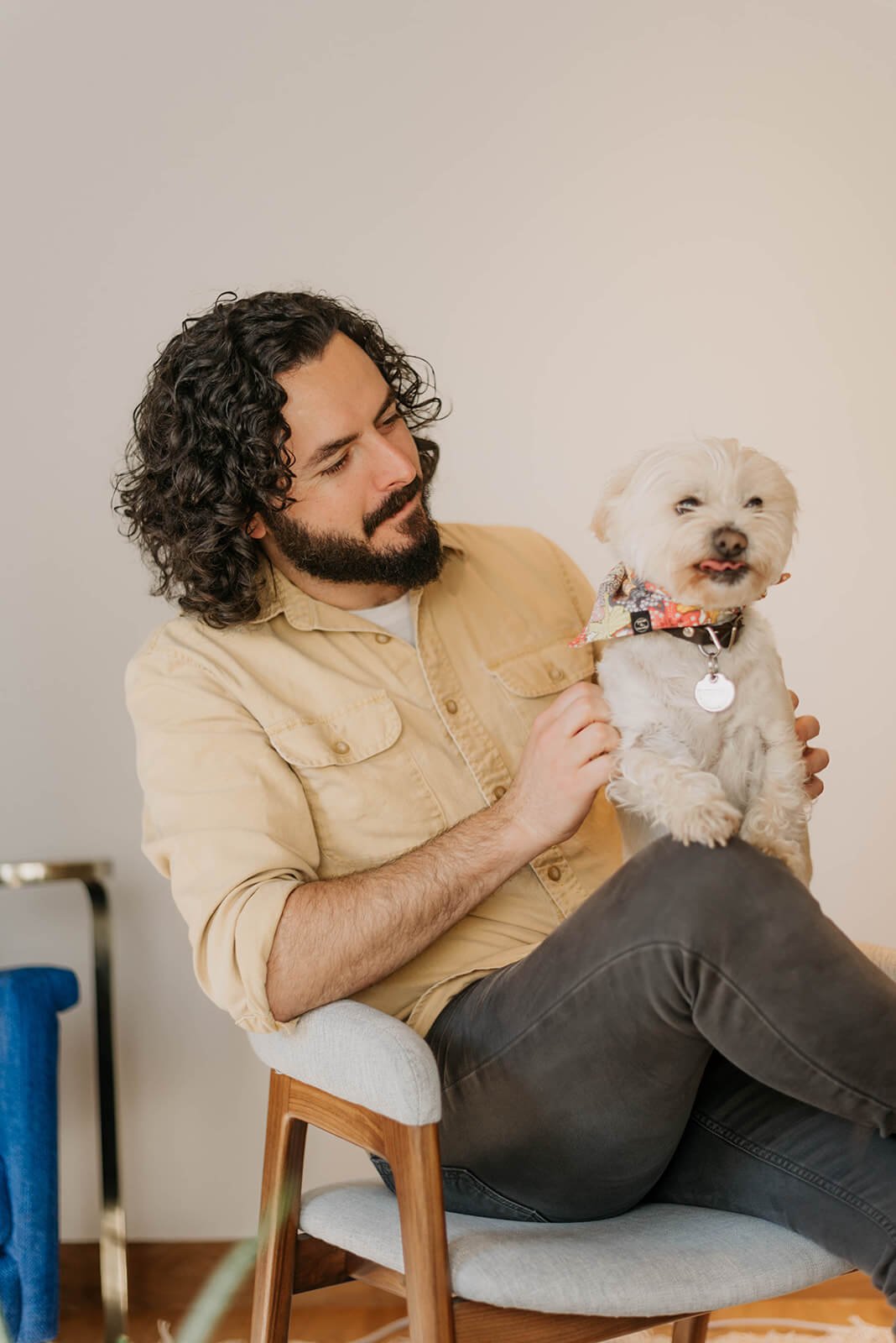

Paul is the co-founder of Kindman & Co, an immigrant, refugee and acculturated American. He loves working with couples, partners and multicultural relationships who are navigating unique challenges of honoring many belief systems and traditions within relationships and families.
I am here to help you celebrate all the parts of yourself and begin to live the fully authentic, emboldened life that you desire. I live at the intersection of queer and Mexican and have felt that fully embracing one identity means grappling with the other. From feeling shame about my curly hair, to fearing the expression of my androgynous presentation, I have come to value and embrace these revered parts of myself. I truly get the complexities of navigating intersecting identities and want to help you feel empowered to also live your truth.
GET HELP NOW
If you are interested in therapy with Kindman & Co. and would like to learn more about the services we have to help you, follow these quick & easy steps:
Schedule a free 20-minute phone consultation with our Care Coordinator.
Get matched with the therapist who’s right for you.
Start feeling more supported and fulfilled in your life and relationships!
THERAPY AT KINDMAN & CO.
We are here for your diverse L.A. counseling needs. Our team of therapists provides lgbtqia+ affirmative therapy, couples therapy & premarital counseling, grief & loss counseling, group therapy, and more. We have specialists in trauma, women's issues, depression & anxiety, substance use, mindfulness & embodiment, and support for creatives. For therapists and practice owners, we also provide consultation and supervision services! We look forward to welcoming you for therapy in Highland Park and online.