
On Standing Against AAPI Hate
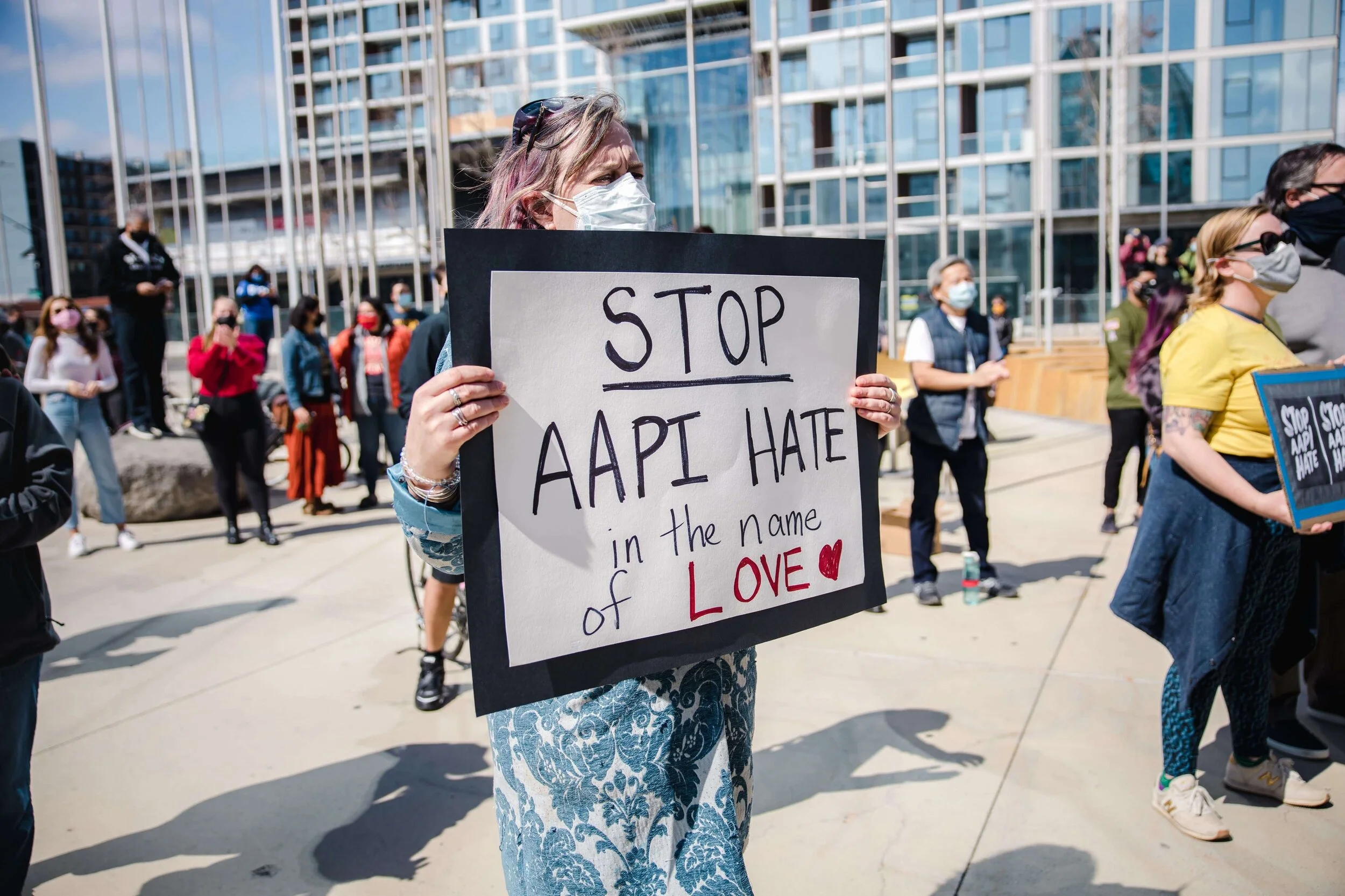
At Kindman & Co., we have a commitment to practicing therapy that is radically vulnerable, inclusive, and from a social justice and equity perspective. In our Anti-Racism Commitment and Land Acknowledgement we spoke generally about our anti-racist and anti-oppressive approach, but in light of recent events, we think it’s important to specifically and unequivocally state that at Kindman & Co., we denounce and stand against anti-Asian racism.
According to data collected by Stop AAPI Hate, an organization founded to address escalating xenophobia and discrimination at the beginning of the COVID-19 pandemic, there have been 3,795 anti-Asian hate incidents reported nationally in the last year. Here in Los Angeles County, the organization received reports of 245 incidents from March-October 2020. Neither of these counts include the incidents that inevitably went unreported.
This increase in anti-Asian hate has happened as a result of the pandemic and the xenophobic rhetoric of our former national leadership, but we also know that anti-Asian racism is not a new phenomenon in the United States.
Our practice is located in California, a state with a long history of oppressive and baselessly discriminatory policies against Asian immigrants and Asian Americans. From the 1852 California Foreign Miners Tax, which covertly allowed for half of the state’s income to be collected from Chinese miners, to the California Alien Land Law of 1913 that prohibited those who were ineligible for citizenship from owning land, to the incarceration of Japanese Americans during World War II—California has been complicit in legally systematizing anti-Asian racism and perpetuating systems that lead to inequity for future generations of Asian Americans.
“Structural racism and oppression against any Black, Indigenous, or other communities of color impacts us all. ”
This history is relevant for us as therapists because the United States mental health system was developed simultaneously with its legal system, and around the same values of adjustment and acculturation. As social justice-allied therapists, we are continuously working to dismantle these ideas of wellness and goodness, and to support our clients in exploring the ways in which racial trauma, race-based traumatic stress, marginalization, othering, and/or the trauma of participating in and benefitting from white supremacy have impacted them. We make space to explore power and oppression within the therapeutic relationship, within systems, and within our clients’ environments because we believe it is inextricable from our experiences as humans.
Discrimination and violence against Asian communities impacts us all. Structural racism and oppression against any Black, Indigenous, or other communities of color impacts us all.
We firmly believe that in order to create a society that is racially equitable and based on intersectional justice, we must continue to advocate for systemic-level changes, and support our clients and community members in doing the same. We must all work toward racial justice.
We encourage you to start taking action, too. At the links below you can donate to community organizations engaging in anti-racist advocacy work, volunteer your time, gather resources, and learn more.
Report incidents, get safety tips, and see more data at Stop AAPI Hate
For more policy and resources specific to the LA area head to the Asian Pacific Policy & Planning Council
For more policy and resources specific to the San Francisco area check out Chinese for Affirmative Action
Asian Americans Advancing Justice offers free virtual bystander intervention training workshops
Volunteer with Compassion in SGV as a chaperone to keep San Gabriel Valley residents safe
Esther Kim’s Print and E-Book resources for recognizing and reporting AAPI hate
